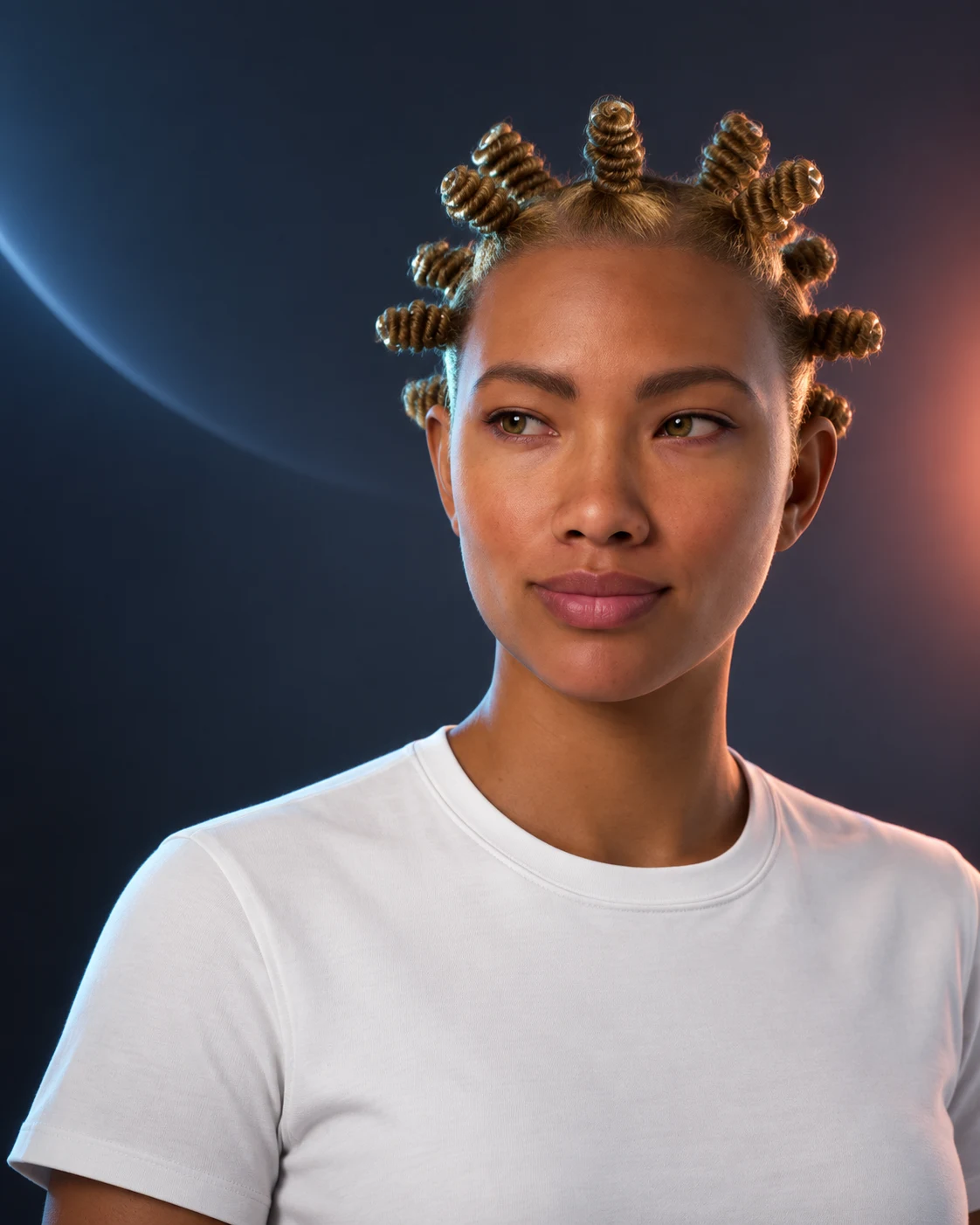
Recognises cues
Gaze, pauses, speaking pace, tone of voice and gestures become part of the conversation’s context.

01 / THE KEY DIFFERENCE
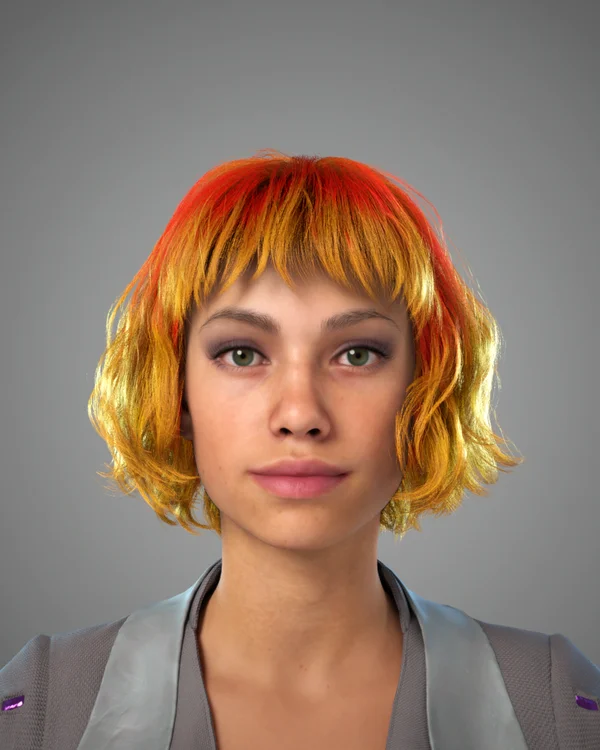
A conventional video avatar plays a prepared message. An Anivatar digital character listens, understands the question, draws on current information and responds as the conversation unfolds.
02 / EMOTIONAL COMMUNICATION
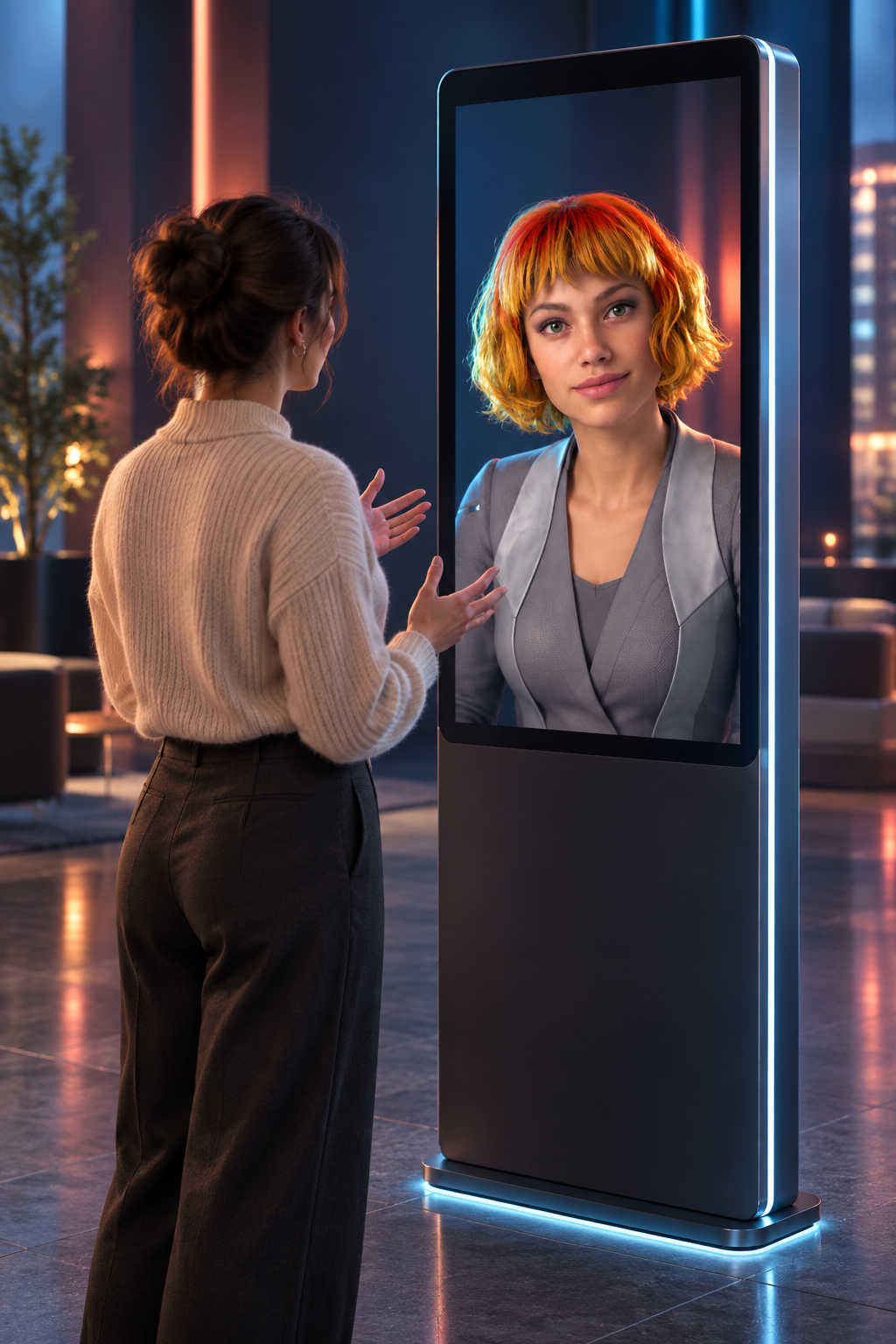
We are developing nonverbal AI communication: the ability to notice cues, interpret them in context and express a response through voice, facial expression, gaze and gesture.
We do not claim that AI feels human emotions. We design emotional communication that helps it respond more attentively, naturally and appropriately to the situation.
Gaze, pauses, speaking pace, tone of voice and gestures become part of the conversation’s context.
It does not guess how someone feels. It considers permitted cues alongside the conversation, its role and the rules for responding.
It chooses words, pace, voice, facial expressions and gestures to make communication clear, calm and natural.
Goal: a conversation in which a person feels seen, heard and guided, without pretending that AI has human consciousness.
Explore how we build perception and expression03 / FROM FACE TO ACTION
The character is the starting point of the experience. Behind it are conversation, knowledge, rules and integrations that lead to a concrete result.
Appearance, voice, facial expressions and personality create a natural point of contact.
FACE · VOICE · MOVEMENTPeople speak in their own words. The character responds in real time and remembers the context.
SPEECH · LANGUAGE · CONTEXTThe agent uses the organisation’s knowledge, rules and data relevant to the situation.
KNOWLEDGE · MEMORY · RULESIntegrations let the agent check data, start a process or hand a request over to a person.
SYSTEMS · PROCESSES · RESULTSCONNECTED ENVIRONMENT
The agent goes beyond answering. It can start a process.Your audience has questions whenever a need arises, not just from nine to five. Give them a digital assistant that can explain, guide and help while staying true to your brand.
06 FEATURES / ONE STANDARD
A digital character does not need sleep, holidays or sick leave. It can support the team outside working hours too.
It can explain something again, offer another example and repeat a step without pressuring the person to keep up.
Repeated conversations do not tire it. We design a calm tone, rules for handling difficult questions and a clear handover to a person.
Simple words, shorter steps and a pace suited to the audience. Courtesy and attentive language are part of the design, rather than a matter of mood.
Connected to the company’s knowledge base, the character can refer back to approved information. We design conversation memory with privacy, updates and verification in mind.
The solution can support several people at once. We test capacity, costs and answer quality against expected demand.
05 / WHAT WE IMPLEMENT
We first decide whom the character should help, in which situation and what action it should enable. Then we choose the technology.
Hotels · showrooms · services · e-commerce
Marketing · events · culture · entertainment
Training · sales teams · industry · education
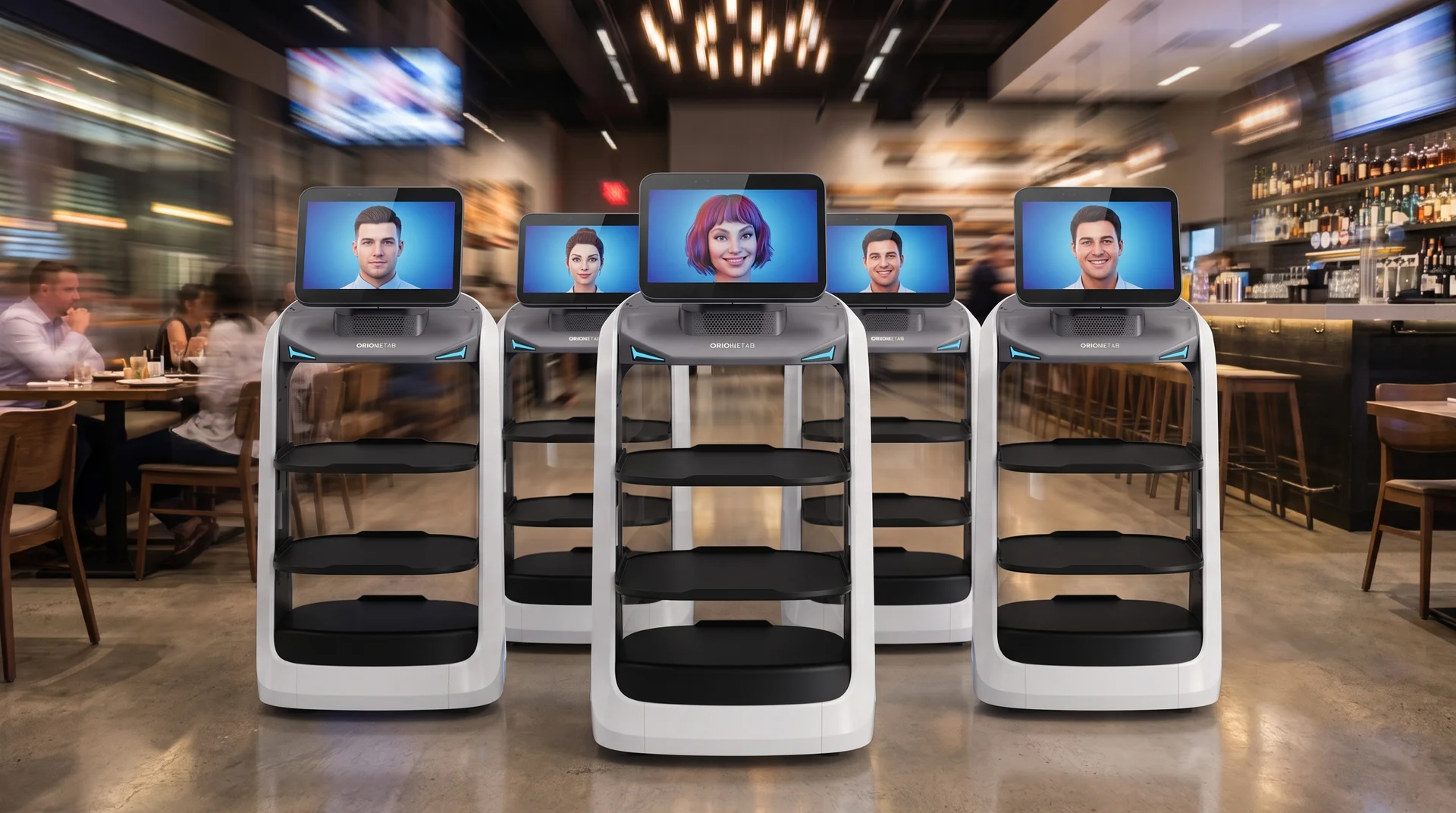
KEY APPLICATION / ROBOT WAITER
We combine an autonomous service robot with a digital character that welcomes guests, explains what is on offer and supports the staff. Physical action meets natural communication.
06 / ONE CORE · MANY CHANNELS
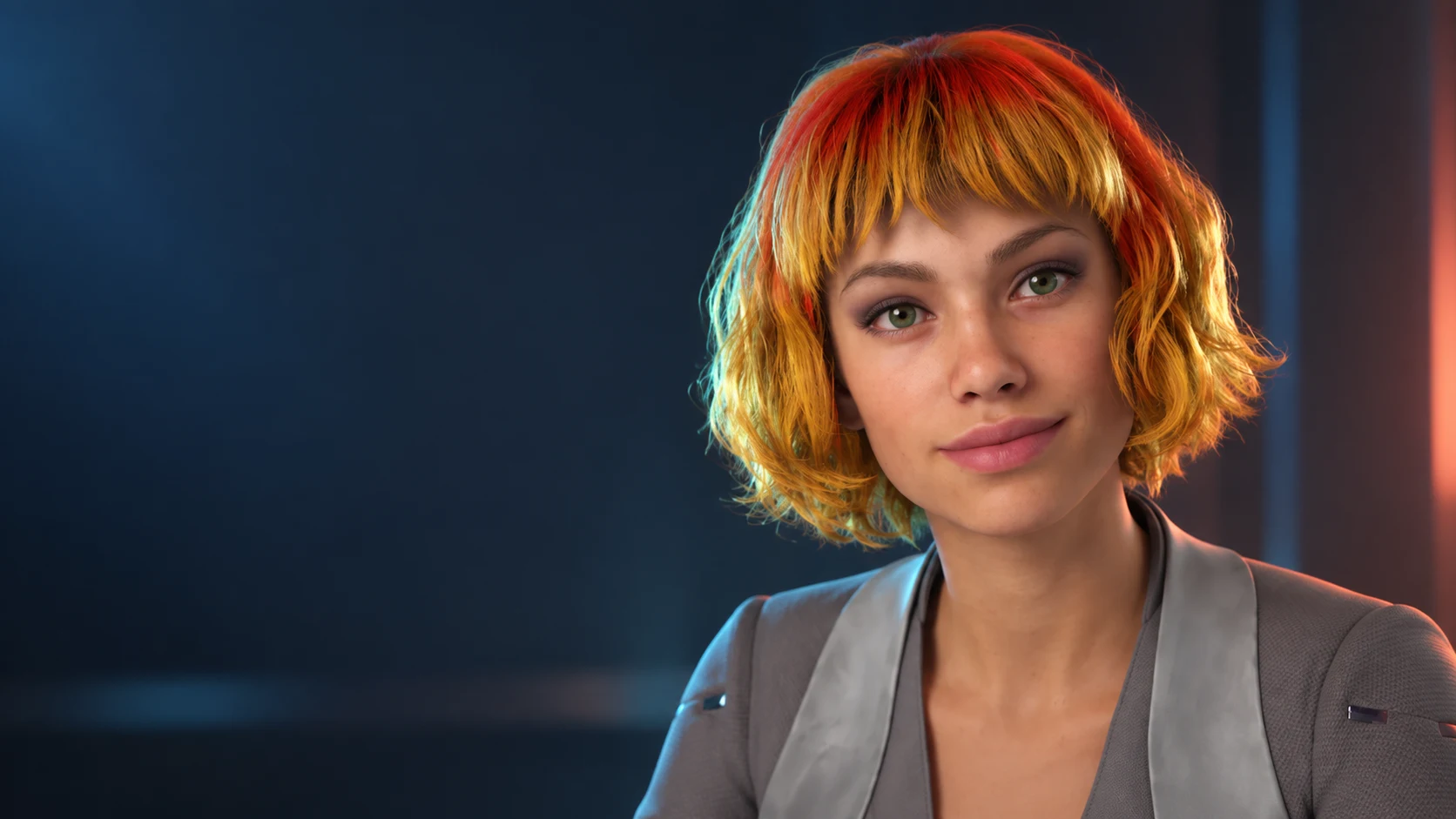
REAL TIME / EXPRESSION / SPACE
A real-time digital human looks at people, speaks and responds. It can appear on a website, screen, kiosk or stage, as well as in XR experiences.
Explore this format07 / CHARACTERS WITH A PURPOSE
Concepts for appearance and personality. We choose voice, knowledge and functions to suit the project. In the gallery, you can also see Alex and his 3D model materials.
Anivatar catalogue
The first face of a new kind of communication. We design the personality, knowledge, voice and scope of action for a specific role.
08 / FROM IDEA TO PILOT
You do not need to design the entire system from the start. Let us choose one situation and test whether AI can genuinely help solve it.
We choose the audience, task and channel, then define how we will know whether the solution helps.
We design the appearance, tone and sample dialogues. Together, we agree on knowledge sources and limits on what the character can do.
We test the chosen scenario, difficult questions and handover to a person. Only then do we plan the next stage.
We design, connect and develop technologies. Not every character needs to be 3D, and not every conversation needs an avatar.
Explore our processAnivatar designs digital characters and AI agents: their appearance, voice, way of speaking, knowledge and connections to tools. The result might be a video presenter, an interactive adviser, a voicebot or an assistant in a physical device.
An avatar can present a finished video, but it can also hold a live conversation. A video plays a prepared script. An interactive avatar processes a question, draws on knowledge and creates an answer during the exchange.
A 2D character appears as a flat image or video. A 3D model has a spatial structure, allowing designers to shape camera angles, lighting, gestures and movement in a virtual scene. Either format can look photorealistic.
A chatbot communicates in text; a voicebot communicates through speech. An AI agent adds a layer that can use knowledge and call authorised tools, for example to check an appointment or create a support ticket.
Yes, if a conversation module is connected. A user writes or speaks, the system interprets the question and finds the necessary information, then responds in text, speech and, if appropriate, character animation.
10 / LET US TALK ABOUT YOUR GOAL
You do not need a specification. Tell us about your audience and the task; together we will choose a first scenario.
Let’s talk about the project